Showing posts with label Hard To Find Films I'm Seeking This Week. Show all posts

May 26, 2012

This Week's Hard-to-Find Film: The Proper Time (1960)


Years before the Billy Jack movies, actor Tom Laughlin was already writing and directing projects for himself, which remain far less accessible than his later successes. The same year he acted in The Delinquents (1957) for director Robert Altman, Laughlin made his writing-directing debut with The Proper Time, which was filmed in six days on a $20,000 budget, but not released until 1960.

Synopsis (from TCM-- warning, spoilers ahead):

College freshman Mickey Henderson suffers from a severe stutter when tense and is only assured and calm with young women his own age. Pressured to participate in a fraternity "rush" by his father, Mickey's subsequent anxiety causes him deep embarrassment during the event and he is rejected by the organization. When Mickey's parents urge him to seek assistance from a speech therapist, he refuses. On campus, Mickey meets Sue and the two are immediately attracted to each other and begin dating. Sue remains unaware of Mickey's stutter as he is happy and confident in her presence. Sue's sultry roommate Doreen takes an interest in Mickey, and despite his relationship with Sue, sets about seducing him. Discovering that Mickey has slept with Doreen, an angry and hurt Sue confronts Mickey, explaining that she wanted to wait for the proper time before having sex. After Sue breaks up with him, Mickey continues seeing Doreen but begins to suspect that she has lied to him and has slept with other men. Under continuing pressure from his parents, Mickey visits the speech clinic, but is uncomfortable with the advised treatment. When Mickey confronts Doreen about his suspicions, she admits she has had numerous lovers both before and after him. Distraught, Mickey begins stuttering and is shattered when Doreen taunts him. At last ready to face his problem, Mickey returns to the speech clinic and Sue.


This outline suggests that even at this young age, Laughlin was an ambitious independent filmmaker, attempting to create some marquee value with sensational subject matter ("sex always sells", as they say), while adding unusual subtext, and no doubt some moralizing. That formula would be perfected with the runaway success of the Billy Jack films, which proved that he could strike gold by working within and without the system: giving the audience what they want, while liberally expounding on his own beliefs and social causes.


As of this writing, not a single review of the film is to be found online, save for a blurb by TV Guide. At best, there is a comment on the IMDB message board: 

"...I saw this movie on TV in the late 1960s on a Barrie, Ontario station... It was obviously one of those "message for teenagers" movies about the pros and (mostly) cons of premarital sex. The acting was absolutely DREADFUL!!!! I recall that I was aware of this as a teenager myself. I've never seen it since, and it's never been listed in any of the TV Movie Guides (Leonard Maltin, etc.)"

Well, I don't know-- there are many cinema spelunkers who would like to find this and decide for themselves, including yours truly. Whatever one's views of Tom Laughlin as a filmmaker, one nonetheless must admire his tenacity- at the very least, this would be interesting if viewed as a stepping stone towards his later successes that followed a similar model.

While the film appears to be out of circulation (perhaps by Laughlin himself?), Contemporary Records has however re-issued the soundtrack by jazz drummer Shelley Manne.  The CD includes a 12-page booklet (perhaps including more stills and information about the movie?).


Tom Laughlin would make another hard-to-find feature. Shot in 1960 over fourteen days, intended as the first of an intended trilogy, We Are All Christ, this movie was finally released in 1963 as Among the Thorns, and then re-released in 1965 as The Young Sinner. This title is deserving of an entry all its own.

(Postscript: one assumes that the IMDB user is referring to Barrie's CKVR. This TV station had a mouth-watering schedule of vintage movies and TV shows, many of which not easily found elsewhere.) 


Apr 23, 2012

This Week's Hard-To-Find Film: NO PLACE TO HIDE (1973)


You're probably saying right now, "Wait a sec- that Sylvester Stallone flick? That's out on video- this isn't hard to find. Has The G-Man finally flipped his lid?" Well, truthfully, I flipped my lid years ago...  but in direct relation to our post, the answer is: "No! I'm talking about the original!"

In the years before Rocky (heck, even before The Lords of Flatbush), when Sylvester Stallone was still trying to pay the bills as an actor, he usually received small roles or walk-ons (like his funny appearance as a subway hood in Woody Allen's Bananas). However, he had second billing (as Sylvester E. Stallone) in an obscure, low-budget counterculture film called No Place To Hide, directed in New York state by Robert Allen Schnitzler. The first billing actually goes to the lantern-jawed Antony Page, who leads a group of radicals into bombing a Manhattan building. However, the movie focuses more on Stallone's character Jerry, and his conflict in choosing between a life in radical politics or settling down at a farmhouse with his hippie girlfriend Laurie. This film no doubt quickly fell off the radar, and if weren't for the presence of the future star, the movie likely would've been forgotten altogether.

However, when Sly Stallone reached superstardom in the 1980s, a couple of projects from his salad days were re-issued to capitalize on his fame. The most notorious of these was 1970's softcore film, The Party at Kitty and Stud's, re-issued as The Italian Stallion.  However, the most curious resurrection of these pictures was No Place To Hide, not least in the ways in which it kept on being re-marketed. In 1981, it was re-issued with the title Rebel, with a different soundtrack (featuring familiar oldies by Country Joe McDonald and Tommy James), and with additional footage. Stock shots of Robert Kennedy, Bob Dylan and other historical footage of the 1960s were liberally added, as was newly shot footage (in Florida and Los Angeles!) of FBI agents closing in on the radical group. This is the version that is obtainable on video: it was released on VHS by Paragon, and later on DVD by several budget labels.

But still, our pop culture hadn't heard the last of No Place To Hide. In 1990, it was re-issued once again with the title A Man Called... Rainbo (get it?), where the soundtrack was re-dubbed with funny dialogue a la What's Up Tiger Lily?- ironically, it is this version that likely got the most acclaim.


But still, where is the original?

The IMDB states that the movie made its television premiere on CBS in 1988- but that was the Rebel version, according to the episode guide of the CBS Late Movie. However, the original film had already played at least twice on television- I saw it.

Circa 1986-7, whenever the fabled Late Great Movies on City TV had an obscure film from the 1970s among its schedule of all-night movies, yours truly would set out to watch it, especially if it was not listed in Leonard Maltin's annual video guide (No Place To Hide has since been added). Until I saw it, I had no idea that this film was really the Rebel video which I saw on a shelf in one of the rental shops downtown, but didn't know until years later, that it was a re-cut.

Also from the IMDB:
The same film under the title "Rebel" is an entirely different version of the film. Director Schnitzler re-edited the film after it was not successful with the die-hard flower-power crowd. The "Rebel" version was prepared in the early 1980's and is the only version currently known to exist.

Since the original movie was still in circulation after the Rebel edit, I doubt that this above statement is true. At the very least, it hasn't completely vanished, because I still have the last twenty minutes of it on the end of a video tape, recorded back in 1987.  Because I haven't seen the original version in over 25 years, it is a pointless exercise to compare it to Rebel, however at least I can discuss the differences in the finale, where the payoff lays.

Rebel runs 80 minutes, but I seem to recall No Place To Hide running about 90 (yes, I kept track of such geeky things in those days). Although some old footage was cut to make Stallone look like the star, with the addition of the "new" shots, perhaps half an hour of the original movie is lost in the re-cut.


A common debate in these "hard-to-find film" posts, is over whether or not these movies are actually worth resurrecting. Once any of these elusive titles are found, they can never live up to the anticipation that has been brewing within the viewer over the years. I'll be honest- No Place to Hide is not a lost classic; in fact, it is a very tedious affair. The plodding narrative is somewhat helped in the re-cut version, but I think the Rebel version has removed the one virtue the original had. Whatever the failings of the 1973 movie, it however had a mood.

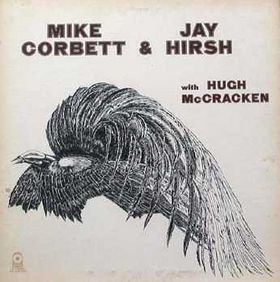
The dreary pacing somehow compliments the overall feeling of restlessness felt among the radicals in their sordid environments. Once the bombing plot is acted upon, and it is revealed that there is an informant in the group, the oblique framing and slow-motion blurs actually add to the paranoia. Even though the original movie is stifling with its clumsy and patchy editing, its low-key approach however leaves a impression. This mood is erased in the Rebel cut, where the soundtrack during the bombing sequence is replaced by some stupid, generic "wacka-chaka" 70s cop show funk (which I would normally love, but not here). Further, the conclusion with the haunting images of hippies at the commune standing over a pillar of smoke rising from a dead body were made even more chilling with the reverberations of the song "Thief in the Night", by Mike Corbett and Jay Hirsh. This, plus the opening song, "I'll Find My Way", by the New York-based folk ensemble Trilogy, were replaced by more generic sounds.


Admittedly the Rebel version is better visually, with its cleaned-up picture and restored colour - however, sometimes, restoration isn't necessarily a good thing. The No Place To Hide print that I viewed is all reds and ugly blues, but somehow that adds to the sordid atmosphere. (At the very least, the movie offers an interesting look at the New York underground- the claustrophobic apartments, cafes and studios are a universe apart from the silver skyscrapers out of reach in the backgrounds.) Finding the original No Place To Hide is surely not like resurrecting a Van Gogh, but at least one will recover a distinct feel, plus a crucial setting of time and place, that has been forgotten, as its canvas has been repainted over time.

Apr 2, 2012

This Week's "Hard To Find" Film: Dreams of Glass (1970)


Although today director Robert Clouse is remembered for his action films, especially his martial arts-themed movies like the classic Enter The Dragon, his first feature (after making a couple of shorts) was the delicate drama Dreams of Glass, about an interracial romance between a young man (John Denos) and an Asian girl (Caroline Barrett).

Synopsis from TCM's database:

Tom, an unpredictable 18-year-old high school drop-out, is in love with Ann, a 16-year-old Japanese-American girl; but Ann's conservative parents and Tom's father, a middle-aged San Pedro fisherman, both object to the relationship. Despite these objections, the couple are happy together. While walking in the local park, playing hide-and-seek and taking photographs of each other, the two are spotted by Ann's mother, who chastises Ann when she returns home. The following afternoon, Tom takes Ann to a deserted warehouse that belongs to his father, and they decide to make it their home.

---

I had actually seen this film on City TV late in 1986, which had aired during the wee hours in the final slot of their all mighty, all night, Late Great Movies. Circa 1986 to 1987, whenever City showed a feature film (especially from the 1970s) that was not listed in Leonard Maltin's video reference guide, its obscurity would therefore entice your humble daredevil reviewer to tune in. As a result, over those years I had seen Invasion From Inner Earth, The Lucifer Complex, Joey and Redhawk, Game For Vultures, Child's Play (the Lumet film, not the killer doll), Fyre, and several others. Some of these titles have since been listed in Maltin's book, but not all! 

25 years on, all I remember about the movie was how the tasteful love scene featured a visual touch like being lensed through the threads of an afghan blanket; someone's TV set falling from one of the boats moored in the marina; and my surprise in seeing Danny DeVito in the final credits. I also remember that the film wasn't great; not terrible, just rather slight. Still, in those days, it was easy to dismiss a film like this because one could see so many more similar works that either depicted youth or a star-crossed romance. However, I've always been curious to see if time has been kinder to this movie. Dreams of Glass has never been available on VHS or DVD; it seems its fate was consigned to a sporadic showing on the late, late show. Alas, over the years, City merged with CTV, and Late Great Movies was a distant memory.

Upon seeing a lot of these films simply because they were not listed in Maltin's book, one would ponder if any or all of these are justifiably obscure. Well, I've always been a believer that time proves the worth of everything; also, it's the Henri Langlois in me that says all cinema should be available for all who wants it, now and for the future. It would be interesting to revisit an honest little picture like this once again. 


Jan 13, 2012

This Week's "Hard-To-Find" Film We're Seeking: Cattle Annie and Little Britches (1981)

"Cattle Annie was an outlaw, with a dime novel dream..."
-Lyric sung in the opening credits of Cattle Annie and Little Britches

If you can find it, I recommend a volume of film reviews entitled Produced and Abandoned (published by the National Society of Film Critics), which collects pieces about movies that may have had critical success, or at best cult audiences, but remain largely unknown to the general public. Among the reviews (featuring works by many authors) is a piece by Peter Rainer about a 1981 western entitled Cattle Annie and Little Britches.

Rainer's prose is devoted less to the film itself, and more to a lengthy tirade about the governing powers that prevent movies from ever finding their rightful audiences.  I wished that he had spent more column space on the virtues of the movie, especially since interested readers could at least vicariously learn more about a film that they may never see- however his review is a cautionary tale about how the life of a film can be ruined by insensitive execs, and is no more true than in our current climate, where films must open wide to maximum screens instead of slowly building an audience. Indeed- thirty years on, after Cattle Annie and Little Britches was acquired by Universal, and summarily dumped after only a scant few playdates (despite even receiving a warm review from Pauline Kael), the film has never been on home video. Luckily, I managed to see this little gem twice on television circa 1983-84, and to this day remember fondly its quirky charm.

In the conclusion of The Man Who Shot Liberty Valance, there is the truthful adage: "When the legend becomes fact, print the legend." Our film centers on a young woman who has succumbed to that process. Clearly enamoured in the exaggerated over-romanticized tales of western outlaws that were published during the frontier days in dime novels (popularized by such writers as Ned Buntline), Cattle Annie is dismayed to find that her revered Doolin-Dalton gang is somewhat less than their larger-than-life depictions in those dime novels. With her young sidekick Little Britches, she joins the gang to re-instill in them the glamourous life of the outlaw that she idealizes.

Scripted by David Eyre and Robert Ward (from Ward's own novel), production for the movie began in the late 1970s, and although it was released (albeit haphazardly) in 1981, Cattle Annie and Little Britches belongs with the many so-called "old man westerns" of the 1970s.  Films as diverse as The Wild Bunch or The Shootist featured their aging stars as frontier men well past their prime who attempt one last hurrah before fading away completely into changing times. In this case, Burt Lancaster, in his 60s, appears as Bill Doolin (although his real-life counterpart only lived to be 38), who attempts to keep together the fledgling Doolin-Dalton gang after their disastrous 1892 robbery in Coffeyville, Kansas. The actor made a tremendous post-senior-aged comeback in the 1980s with Atlantic City, Local Hero, and Field of Dreams, yet this film shows evidence of what was to come, as he is marvelous as a gentlemanly Victorian Doolin who is persuaded by the passions of Cattle Annie.
John Savage and Burt Lancaster.

Another veteran, Rod Steiger, is cast as the marshall Bill Tilghman (the actor's resemblance to the real-life frontier lawman is uncanny), and gives one of his rare low-key, controlled performances as the lawman who is constantly thwarted by the outlaws, and befuddled by the public's admiration for their romanticized ways. The film is rounded out with younger stars John Savage and Scott Glenn (the latter as Bill Dalton), but it is especially notable for stars-to-be Diane Lane (in her third film) and Amanda Plummer (in her first). In her debut, it is clear that Plummer was going to go places. She jumpstarts her future career in unusual roles, and she is simply astonishing as Cattle Annie, whose passion to restore the outlaw gang is enormous.

This is also a career highlight for director Lamont Johnson, who always excelled in character-driven movies, such as The Last American Hero, and another underrated western, A Gunfight. While the script is fine, and there is enough action to satisfy the western fan, one most remembers the interplay among the cast: the love and humour displayed between the characters is what makes this lyrical film really shine.

Diane Lane and Amanda Plummer
Thirty years is long enough for people to discover this movie for the first time.  Or for those who were fortunate to catch it during its fleeting dates in the 1980s, a long overdue reunion is welcomed. Universal clearly didn't know what they had- this marvelous picture needs to be unearthed now!

UPDATE! In 2020, Kino Lorber has released this film to DVD and BluRay. Review will be added once we find a copy.

Jan 4, 2012

This Week's "Hard-to-Find Film" We're Seeking: The Troublemaker (1964)


The more one keeps discovering cinema, the more one realizes how much more there is to know. And despite how in the age of DVDs, Netflix and many other wide resources to instantly obtain almost any movie one can think of, there are always titles that have slipped through the cracks and remain elusive to us, despite our best efforts.  The Troublemaker (1964), and the filmography of its creator, Theodore J. Flicker, exemplify both of these points.

Although today Flicker is perhaps best remembered as the co-creator of the Barney Miller TV series, he had written and directed several quirky films in the 1960s and 1970s. Of these, The President's Analyst (with James Coburn) remains the best-known. He had started out in Chicago's Compass Theater (America's first venue of improvisational comedy), working alongside Elaine May. In 1959, he wrote the book for, and directed the world's only "beatnik" stage musical, The Nervous Set (in which the jazz standard, "Spring Can Really Hang You Up The Most" debuted). In the 1960s, he also worked in theater on New York's Bleecker Street, with such up-and-comers as Buck Henry, Joan Darling, Gene Hackman, George Segal, Godfrey Cambridge and Al Freeman Jr. (many of whom would appear in his subsequent film work) in the shows The Premise, and then The Premise in Living Color (which tackled the subject of racism).

Flicker and Buck Henry co-wrote the screenplay for his maiden directorial feature, The Troublemaker (1964). The synopsis (courtesy tcm.com):

"Jack Armstrong, a naive Midwesterner and former chicken farmer, runs into difficulties when he tries to open a coffee house in New York City without paying protection money to racketeer Sal and his associates. Armstrong's lawyer, T. R. Kingston, is also associated with Sal and is secretly paying off the mobster. Armstrong's moral indignation invokes Sal's wrath, and Jack is kidnaped and placed in a mental institution before he is finally able to obtain evidence that he is being harassed by criminals. Jack and his girl friend, Denver, discover that the crime commissioner is the real head of the graft racket, and, with the help of Kingston, they turn the tables on him. In the process, however, Jack loses his own integrity and becomes the biggest grafter of all."

I had actually seen this film during the Christmas break on Bravo in 1996. Canadian TV viewers were unknowingly living in a silver age during those times, when obscure films like this were still being programmed as filler on this arts channel, which has subsequently resolved to showing incessant re-runs of CSI.  However, dear reader, due fifteen years of clouded memory (and that I had the stomach flu while watching it), I can recall no other intricate details of the movie than to say that sadly, the movie is not a lost classic, as its attempted quirky humour is rather forced, and simply doesn't work. Nonetheless, this film is essential alone for fellow enthusiasts interested in New York-lensed films of the 1960s, which capture the era's Greenwich Village counterculture. It is also a valuable snapshot of the many future movers and shakers involved in its making: Tony-award winning actor Tom Aldredge (later in TV's Boardwalk Empire and The Sopranos), Premise player (and future film director) James Frawley, future director Joan Darling (who blazed a trail with TV's Mary Hartman Mary Hartman), comedian Godfrey Cambridge (who is remembered for his biting stand-up comedy about racism), and of course, screenwriter Buck Henry, who personified the decade with his work on The Graduate.

The Troublemaker is a snapshot of the era, when social change was upon the horizon, and being reflected in the arts. For that simple historic fact, it is worthy of another look today. This was released in the 1960s by Janus Films, a name familiar to many connoisseurs of the Criterion DVDs. If the film still exists in a playable form (and it must, if I saw it on television fifteen years ago), and is under the umbrella of the Janus-Criterion family, they truly must put it out. (In fact, a boxed-set of Theodore Flicker's films would be a Godsend to those, like myself, who need to see much of his work for the first time.)

Although Flicker kept busy in the next two decades writing and directing television (not least a certain TV program about a police station), for the big screen he wrote the screenplay for the delightfully daft Elvis Presley vehicle Spinout, and wrote-directed the seminal The President's Analyst (1967) and the bizarre counterculture allegory Up The Cellar (1970). Before calling it a career in the film-television world, he also made the Canuck classic Jacob Two Two Meets the Hooded Fang (1977), and the hick flick, Soggy Bottom USA (1980).

Theodore J. Flicker turned to sculpting, legally changed his name to "Ted" Flicker, and for all that, still managed to keep with the pulse of change. His novel, The Good American, was among the first to be exclusively distributed on this new thing called the internet. He was also the subject for the 2007 documentary, Ted Flicker: A Life in Three Acts (which is now on my "must-see" list). With the creation of a documentary on the man's work, it seems we're not alone in thinking that the work of Theodore J. Flicker needs a second glance.  We can get started by making The Troublemaker accessible for us again.

Trailer for Ted Flicker: A Life in Three Acts


Stills for The Troublemaker


Sep 14, 2009

Hard To Find Films I'm Seeking This Week (09.14.09)


Since we're in a Roger Corman frame of mind lately (well, we're in a Roger Corman frame of mind a lot), I thought this week's "hard to find" post should be devoted to his 1957 opus Naked Paradise.

From the IMDB:
Tagline:
Temptation and terror... in a savage land of wild desire!
Plot:
Gangster Zac Cotton and his two henchmen, Mitch and Sonny, try to get a boat to get off a tropical island after a botched robbery heist.

This was among the three films Roger Corman directed during a stint in Hawaii (the others, Viking Women Vs. The Sea Serpent and She Gods of the Shark Reef are easy enough to find on either VHS or DVD), and by his own admission in his autobiography How I Made a Hundred Movies in Hollywood and Never Lost a Dime, he considers this one to be the most unusual of the lot. Wish I knew more, but this effort (one of many pictures Corman helmed in that busy year of 1957) has remained impossible to find. When I was gathering materials for The Roger Corman Scrapbook in 2006, there were a handful of elusive titles which have since surfaced in one fashion or another (ie- Von Richtofen and Brown, Target Harry), but alas Naked Paradise remains an obscure object of desire.

Corman regulars Richard Denning, Beverly Garland, Dick Miller and Jonathan Haze are in it, so by rights it should at least be watchable. Where is this movie?

Jun 15, 2009

Hard To Find Films I'm Seeking This Week (06.15.09)


In this chosen field, it seems that the more you research, you also find how much more there is to know about. For instance, as I fastidiously uncover any obscure film from the 1970's I can get my hands on, I find that for every title I do track down, there are three or four others I read about which have slipped through the cracks... and naturally I'm interested in viewing those too!

So for fun, I thought I'd commence with a new list every Monday, featuring a handful of elusive titles that pop up in my research, which I summarily am interested in tracking down.

The Pyramid (1975; Gary Kent)

This sounds like a very interesting premise (from the IMDB):
"A young TV news reporter grows tired of Commercial programming and decides to cover more positive stories. He is fired for his troubles, and goes on a personal search for truth and beauty in the media. A voyage in consciousness for the millenium".

There is a new age web site which also has an intriguing review of the film. Gary Kent is a fascinating figure in "fringe cinema", acting and doing stunts in low-budget genre films from the 60s onward, having worked with Al Adamson, Dave Hewitt, Richard Rush and many others. This is one the handful of films he's also directed, and sounds all the more intriguing for the "finding oneself" motif that was similarly explored in films at the time.

In fact, I wrote Mr. Kent about this film-- he owns the rights to the movie, and does plan to release it to home video some day. Here's hoping that happens sooner instead of later. Additionally, his book Shadows and Lights: Journeys with Outlaws in Revolutionary Hollywood is coming out next month-- and this looks like a must-read.

You and Me (1975; David Carradine)

From the BFI:
"A travelogue-like odyssey of a Hell's Angel type who teams up with a boy on the run from home. They ride up the California coast into Oregon and Washington on his bike."

The two comments I've received regarding my obit for David Carradine have both been about this elusive film in which he directed himself, his two brothers, Barbara Hershey and Gary Busey. Apparently, it was released in some state for sporadic screenings-- hopefully with the media attention accorded Mr. Carradine of late, someone explores the possibility of getting this seen.

The Alien Encounters (1979; James T. Flocker)

I actually saw part of this film on late night television in 1983... I think. (I mentioned the following in the late-night issue of ESR.) All I remember is one scene where a man and a teenager sit for what seems like an eternity on the side of a mountain waiting for a UFO to pass by. During this time, the kid mentions he's like any other teenager who's into sex, drugs and hard rock. Finally, the UFO does arrive, but because the movie is so slow, it's rather anti-climatic. Although I only caught a snippet of this picture, for years it had bugged me as to what I had seen, and only last summer did I finally get a clue thanks to a discussion the IMDB.

This movie was one of many low-budget UFO films made back in the day, capitalizing on the decade's fascination with strange phenomena. I have seen other micro-budgeted genre films by director James Flocker, but this one remains the missing link. If anything, I would appreciate the film more today, because with its lack of stars (thusly using everyday people in its cast) and slow pace (which makes the daily grind of research all the more draining and sometimes disappointing), would actually make it more true-to-life than other films which inject phenomena into reality. However, I won't know for sure until I can finally track down a copy.


=========================================


There are many, many others, but I don't want to shoot the bundle in the first post. More next week....