Showing posts with label Counterculture. Show all posts

Apr 23, 2012

This Week's Hard-To-Find Film: NO PLACE TO HIDE (1973)


You're probably saying right now, "Wait a sec- that Sylvester Stallone flick? That's out on video- this isn't hard to find. Has The G-Man finally flipped his lid?" Well, truthfully, I flipped my lid years ago...  but in direct relation to our post, the answer is: "No! I'm talking about the original!"

In the years before Rocky (heck, even before The Lords of Flatbush), when Sylvester Stallone was still trying to pay the bills as an actor, he usually received small roles or walk-ons (like his funny appearance as a subway hood in Woody Allen's Bananas). However, he had second billing (as Sylvester E. Stallone) in an obscure, low-budget counterculture film called No Place To Hide, directed in New York state by Robert Allen Schnitzler. The first billing actually goes to the lantern-jawed Antony Page, who leads a group of radicals into bombing a Manhattan building. However, the movie focuses more on Stallone's character Jerry, and his conflict in choosing between a life in radical politics or settling down at a farmhouse with his hippie girlfriend Laurie. This film no doubt quickly fell off the radar, and if weren't for the presence of the future star, the movie likely would've been forgotten altogether.

However, when Sly Stallone reached superstardom in the 1980s, a couple of projects from his salad days were re-issued to capitalize on his fame. The most notorious of these was 1970's softcore film, The Party at Kitty and Stud's, re-issued as The Italian Stallion.  However, the most curious resurrection of these pictures was No Place To Hide, not least in the ways in which it kept on being re-marketed. In 1981, it was re-issued with the title Rebel, with a different soundtrack (featuring familiar oldies by Country Joe McDonald and Tommy James), and with additional footage. Stock shots of Robert Kennedy, Bob Dylan and other historical footage of the 1960s were liberally added, as was newly shot footage (in Florida and Los Angeles!) of FBI agents closing in on the radical group. This is the version that is obtainable on video: it was released on VHS by Paragon, and later on DVD by several budget labels.

But still, our pop culture hadn't heard the last of No Place To Hide. In 1990, it was re-issued once again with the title A Man Called... Rainbo (get it?), where the soundtrack was re-dubbed with funny dialogue a la What's Up Tiger Lily?- ironically, it is this version that likely got the most acclaim.


But still, where is the original?

The IMDB states that the movie made its television premiere on CBS in 1988- but that was the Rebel version, according to the episode guide of the CBS Late Movie. However, the original film had already played at least twice on television- I saw it.

Circa 1986-7, whenever the fabled Late Great Movies on City TV had an obscure film from the 1970s among its schedule of all-night movies, yours truly would set out to watch it, especially if it was not listed in Leonard Maltin's annual video guide (No Place To Hide has since been added). Until I saw it, I had no idea that this film was really the Rebel video which I saw on a shelf in one of the rental shops downtown, but didn't know until years later, that it was a re-cut.

Also from the IMDB:
The same film under the title "Rebel" is an entirely different version of the film. Director Schnitzler re-edited the film after it was not successful with the die-hard flower-power crowd. The "Rebel" version was prepared in the early 1980's and is the only version currently known to exist.

Since the original movie was still in circulation after the Rebel edit, I doubt that this above statement is true. At the very least, it hasn't completely vanished, because I still have the last twenty minutes of it on the end of a video tape, recorded back in 1987.  Because I haven't seen the original version in over 25 years, it is a pointless exercise to compare it to Rebel, however at least I can discuss the differences in the finale, where the payoff lays.

Rebel runs 80 minutes, but I seem to recall No Place To Hide running about 90 (yes, I kept track of such geeky things in those days). Although some old footage was cut to make Stallone look like the star, with the addition of the "new" shots, perhaps half an hour of the original movie is lost in the re-cut.


A common debate in these "hard-to-find film" posts, is over whether or not these movies are actually worth resurrecting. Once any of these elusive titles are found, they can never live up to the anticipation that has been brewing within the viewer over the years. I'll be honest- No Place to Hide is not a lost classic; in fact, it is a very tedious affair. The plodding narrative is somewhat helped in the re-cut version, but I think the Rebel version has removed the one virtue the original had. Whatever the failings of the 1973 movie, it however had a mood.

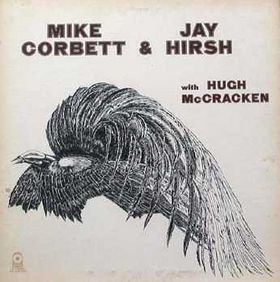
The dreary pacing somehow compliments the overall feeling of restlessness felt among the radicals in their sordid environments. Once the bombing plot is acted upon, and it is revealed that there is an informant in the group, the oblique framing and slow-motion blurs actually add to the paranoia. Even though the original movie is stifling with its clumsy and patchy editing, its low-key approach however leaves a impression. This mood is erased in the Rebel cut, where the soundtrack during the bombing sequence is replaced by some stupid, generic "wacka-chaka" 70s cop show funk (which I would normally love, but not here). Further, the conclusion with the haunting images of hippies at the commune standing over a pillar of smoke rising from a dead body were made even more chilling with the reverberations of the song "Thief in the Night", by Mike Corbett and Jay Hirsh. This, plus the opening song, "I'll Find My Way", by the New York-based folk ensemble Trilogy, were replaced by more generic sounds.


Admittedly the Rebel version is better visually, with its cleaned-up picture and restored colour - however, sometimes, restoration isn't necessarily a good thing. The No Place To Hide print that I viewed is all reds and ugly blues, but somehow that adds to the sordid atmosphere. (At the very least, the movie offers an interesting look at the New York underground- the claustrophobic apartments, cafes and studios are a universe apart from the silver skyscrapers out of reach in the backgrounds.) Finding the original No Place To Hide is surely not like resurrecting a Van Gogh, but at least one will recover a distinct feel, plus a crucial setting of time and place, that has been forgotten, as its canvas has been repainted over time.

Feb 5, 2012

The Ski Bum (1971)


Director: Bruce Clark
Writers: Bruce Clark, Marc Siegler (“suggested by the novel of Romain Gary”)
Producer: David Dawdy
Music: Joseph Byrd
Cinematographer: Vilmos Zsigmond
Avco-Embassy; 95 min; color


Cast:
Zalman King (Johnny), Charlotte Rampling (Samantha), Joseph Mell (Burt Stone), Dimitra Arliss (Liz Stone), Michael Lerner (Rod), Penelope Spheeris (Star the Witch), Jackson Browne, Ned Doheny (Stoned Guitars)


From the late 1960s to the early 1970s, Hollywood was still run by aging moguls, who nonetheless were so out of touch with the long-haired baby boomers, that they would bankroll practically anything that had even the most vague references to the counterculture generation or the themes that it embraced. It truly was a magical time where the only rule was that there were no rules, and as a result countless movies, big and small, were made which captured that restless, freewheeling spirit. Granted, many of those films are imperfect (some badly dated), yet that imperfection is often the price paid when striving for something of higher enlightenment. And even so, warts and all, these scruffy, stuttering, wildly uneven opuses from those years have a certain vitality to them that one usually misses in today’s antiseptic mainstream cinema, and that is why people like myself want to see every damn one of them.

I mean, whenever else in film history will you hear a dialogue like: “I just killed your dog.” “The poodle?  Outta site! Come on inside for a drink.”?

If for nothing else, The Ski Bum is a valuable relic of that wrinkle in time, when unconventional approaches to moviemaking could still be embraced by the mainstream. It was a joyous winter day when I discovered that one of my favourite independently owned video stores had this film on the shelf- elated with being able to see the film after years of curiosity spent over Leonard Maltin’s capsule review in his annual movie guide, especially because he gave it the BOMB rating. (Any 70s film that he’d rate BOMB or *1/2 stars would instantly command my attention, because usually these movies would at least be unique, despite or because of their flaws.)


Although some sources (Maltin’s included) say that this runs for 136 minutes (and I couldn’t imagine how), the copy I’ve screened plays for 95 minutes (and it’s amazing it takes even that long to say what little it has to). This scenario (“suggested” by Romain Gary’s novel of the same name, whatever the hell that means) is about Johnny Cochrane, a moody ski instructor whose high-class girlfriend Samantha (played by the ravishingly mysterious Charlotte Rampling) works for a shady aristocrat. At first her boss hires Johnny to provide skiing lessons to his two monster children (and seeing him on the slope dressed in a black trenchcoat instead of a jumpsuit makes him the most peculiar skiing instructor ever), yet before long Johnny begins doing other suspect tasks for the boss, including buying dope from some of the most exaggerated hippie stereotypes ever seen in a so-called mainstream movie.
While on the surface, Johnny is the typical cultural misfit that is familiar to many protagonists of 1970s cinema, who rejects the status quo yet cannot find roots anywhere else, either.  Similarly, Johnny tries to avoid the high-class society that welcomes him into their orbit, preferring to be his own man, yet eventually panders to it once he realizes he’s nothing without it.  The throwaway line in which Samantha asks him, “You’re a Gemini, aren’t you” is perhaps the most telling, suggesting a conflicting, dual personality-  certainly Johnny is unpredictable, gentle one moment, screaming his head off the next. (And while I confess to liking Zalman King’s screen presence, he’s much better quiet, and grating when he’s intense.)

Whatever political undertones that may exist in Gary’s novel (based upon the synopsis I’ve read about it) are practically transparent here, however this filmic “suggestion” is about class structure. There are always blockades to his entrances into Samantha’s world of leisure and cocktail parties (he is constantly hounded by concierges and doormen), until she personally allows him in. Ultimately, Johnny realizes he can’t live within or without them.

And while the movie may have had commercial appeal alone for its fashionably confused, aimless protagonist, the filmmakers decided to make the movie a bit more hip (for better or for worse) with such psychedelic effects as echoing voices on the soundtrack to suggest how everyone is smothering Johnny. Even more negligible is the steam bath sequence, in which Vilmos Szigmond overexposes the scene to hot whites, suggesting that it is all a fantasy scene in which all the characters intertwine, with revealing dialogue that further explores Johnny’s psyche, that however turns out as Fellini on a bad day. There is even the old “movie within a movie” gimmick, in which our heroes are beseiged by hip young filmmakers who are shooting something called "The Ski Bum": this once innovative layer exploited only a few years earlier by the French New Wave was already old hat by 1971.

The Ski Bum is more enjoyable to have seen than to sit through: it isn’t terrible, but it won’t make your day, either. History does not record how the picture fared among the few who saw it in the day, yet forty years have not been kind to this lumbering account. But still, probably the only ones who would want to see this today are completists of counterculture cinema (like myself), no matter how archaic they seem. And the hypothesis was correct-- this 1970s movie given a Maltin BOMB rating is at least interesting--- if perhaps for the wrong reasons.

Feb 4, 2012

Zalman King (1942 - 2012)


My first encounter of Zalman King was in his lead role for 1976‘s Blue Sunshine, which I saw for the first time in the summer of 1986. Although I hadn’t known it then, by the time I had viewed this picture, this actor had since strayed from before to behind the camera, as a producer. Then as now, Blue Sunshine would instantly became one of my favourite cult movies, and if the situation presented itself, one of the films I’d take to a desert island. Additionally, then as now, I would concede that Zalman King was no Olivier, there was just something fascinating about him onscreen.

Dec 25, 2011

The Junky's Christmas (1993)


Directors: Nick Donkin, Melodie McDaniel
Writer: James Grauerholz, based on a story by William S. Burroughs
Producers: Francis Ford Coppola, Francine McDougall
Music: Hal Willner
Cinematography: Simon Higgins, Wyatt Troll
Production Design: Andrew Horne
Island Pictures; 21 min; B&W

Cast:
William S. Burroughs (narrator)


The film opens with author William S. Burroughs rifling through his bookshelf, finding his own copy of Interzone (in which the original story for the movie is collected) and sitting down by the Christmas tree to read.  This image alone is jarring enough- Burroughs the legendary underground anti-hero at the age of 75 (didn’t he always look 75?) turning into Jimmy Stewart?!?  There is a low-angle shot of his condor-shaped profile looking whimsical standing beside the tree, and right away we are wondering what kind of perverse whole-someness is being provided us?  Has the collusion of mainstream and underground finally gone too far?  Who would imagine that a tale from the Bard of Benzydrine would be presented to the screen by Francis Ford Coppola?

Once the grandfatherly Burroughs settles down into his easy chair, and his crystalline talons turn the hard pages, we dissolve from this natural world into a twenty-minute claymation short, as he narrates for us the pathetic efforts of a dope fiend trying to score on Christmas Day. What surprises here is not the junkie’s change of heart in the end.  Rather, this celluloid trip is more valuable for documenting a part of the world on December 25th that has seldom been realized for cinema.  In other words, there is no Capra-esque fantasy of George Bailey running down the street, and wishing everyone a Merry Christmas as potato flakes of snow fall to the ground.  Instead this is about the lonely people sleeping on the street that your sedan passes by as you go visit your folks.

Usually the work of Burroughs is a Dadaist science fiction nightmare in which the author can run wild with his ideas and satiric metaphor.  It is rare to see a Burroughs piece (and admittedly a short one) in which the characters are real people, presented matter-of-factly, for us not to judge, nor for him to celebrate, but merely for us to understand.  Although we may not think that the people scoring crack outside my office are human beings underneath, but that matter is easily forgotten when we have to clean all the pipes and prophylactics off of the back step.  In other words, The Junky's Christmas is presenting an ugly world that, surprisingly, has its own moral code.

(adapted from a review originally presented in ESR #4)

May 3, 2009

The Third Floor Drive-In: Season 5, Episode 3

Tonight's film: Ghetto Freaks (1970)

(preceded by trailers for The Pusher and The Hard Road)


It was an unusually cold night at The Third Floor Drive-In ® . We were shivering in our blankets, quivering while sipping coffee as Ghetto Freaks unspooled. As it turns out, the conditions couldn't have been more appropriate to view such a film. This hippie exploitation avoids the usual locations of sunny California in the "summer of love", and displaces the action to wintertime in Cleveland as these long-haired kids hand out pamphlets on the streets while freezing to death. The production history of this movie is as interesting as the onscreen shenanigans. This was originally titled Love Commune (and far more accurately at that), but it was re-released as Ghetto Freaks with two minutes of a silly hippie cult initiation scene, in which the African-American member of the commune . It was directed and co-written by Robert J. Emery, perhaps better-known for his later string of Florida-produced exploitation (Ride In a Pink Car was in an earlier season of The Third Floor Drive-In ® .

By the time of its release, there had been many films made about the counterculture, yet this one is one of the best-- both an exaggerated caricature and plain presentation of the hippie movement. Witnessing the sex orgy scene (with anamorphic lenses, great bad rock music and well-endowed flower children) might make you want to tune in, turn off and drop out too, but otherwise shows that hippie life isn't the soft-focus Utopia evoked by Laszlo Kovacs' lens in Psych-Out. These long-haired kids are constantly harassed by fascist cops (reminding us once and for all about the turmoil of the decade not recalled in K-Tel compilations), get bugged by gangsters wanting to push their drug cartel into the scene, and eke out a living hustling underground newspapers on the street. All fifteen of them live in one apartment, and are led by a guru named Sonny, who looks twenty years older than he ought to be (but didn't they all, in these hippie flicks?). In one amusing scene, all the kids get on one bus with the same bus pass that is circulated by handing it out the window to the next person to board the vehicle-- doesn't the bus driver notice? Among the vague linear threads of this fascinating time capsule is the burgeoning yet tragic relationship between Sonny and the newest commune member Diane, a runaway from her upper-class but ultra-conservative upbringing.

Ghetto Freaks is an interesting contradiction. On the surface it attempts to be a gritty expose, and largely succeeds thanks to Paul Rubinstein's docu-like photography (the numerous street scenes seem off-the-cuff) and the likely improvised, overlapping dialogue between the pothead protagonists. But no film with such an overlong drug-trip sex-orgy sequence can be taken as "the real thing", and it also has a strange Brechtian device a la Godard, where in one protest sequence, a film crew is clearly in view. What at first seems to be a mistake occurs again after the shocking finale- actors and crew stand around movie lights at the previous location while the credits roll, as if to say "up yours", much like the early scene where a hippie gives the viewer the peace sign and the finger in a single shot.

Are we to presume that the movie was just a big put-on? Ghetto Freaks thusly (and perhaps carelessly) raises more confusions than conclusions, but only makes this flick more thought-provoking than was intended. The cameras finally become turned upon the viewer forcing one to consider how we as a society have been portraying the movement in media. I'd be interested to know what -if any- response this perplexing picture received in its theatrical runs. People probably just wanted some sex and drugs, which it does deliver, plus a whole lot more bang for their bong.

View the groovy trailer for Ghetto Freaks here:

Jan 15, 2008

Christopher's Movie Matinee (1968)


Today I received an e-mail from my friend Mike who was at the Jazz Conference here in town last week, and told me that among the guests was Darius Brubeck- yes, the son of pianist Dave Brubeck. Upon the mention of his name, I was reminded of his earlier "Canadian connection"-- he was one of the musicians who worked on the score for Mort Ransen's nearly forgotten counterculture epic, Christopher's Movie Matinee. The film became stuck in my mind all day, enough to be christened tonight's "film of the day".

My sole viewing of this curiosity piece was at a rare public screening at Cinematheque-- almost exactly ten years ago. The film was introduced by local musician Chris Whiteley, who also worked on the joyful soundtrack. This 1968 documentary is candid look at a handful of long-haired teenagers, following them through their daily existence. While this film is not as dated as other counterculture films of the period, it does however stand as a document of the naivete that in general is the essence of youth, but in specific, these spacey young hippies make observations about the real world that exists outside of their cocoons. One well-fed bespectacled youth, in a friendly argument with an old man on a bus, compares himself with the black population as to how the world looks down upon hippies!

The subjects of this movie in a sense are representative of Canadian cinema of the 60's to the early 1970's: youthful, naive, yet free. Films like Claude Jutra's A Tout Prendre, Don Owen's Nobody Waved Goodbye and Don Shebib's Goin' Down the Road pointed their cameras into the streets to tell stories that were at once Canadian yet universal, and yet freely experimented with form. While not as radical as The French New Wave, Canadian films of this time were surely more playful, recalling some of the freewheeling style of the British Kitchen Sink movement. Not yet daunted by self-consciousness or deluded by tax credits to create ersatz Americanized movies, our films of this period were fresh and alive.

While this unscripted picture is interesting most for a look back at the counterculture period (especially those glimpses of the pre-yuppified Yorkville, where the streets are teeming with young people), and seeing how these kids react in whatever situations the camera finds them (I love the one guy going on about how he loves little kids' drawings because they're beautifully abstract), there is another interesting layer... which happened accidentally. This documentary becomes a movie within a movie, as the organic process of creating this film as it happens becomes a self-referential theme, and ends with the realization that the NFB has pulled the plug on the project, leaving the kids to ask the question of what is going to happen to the movie. This fatalistic ending is also emblematic of the flower power movement: something that ended much too quickly before really getting started.